Building a Custom Home in Texas Without Regret
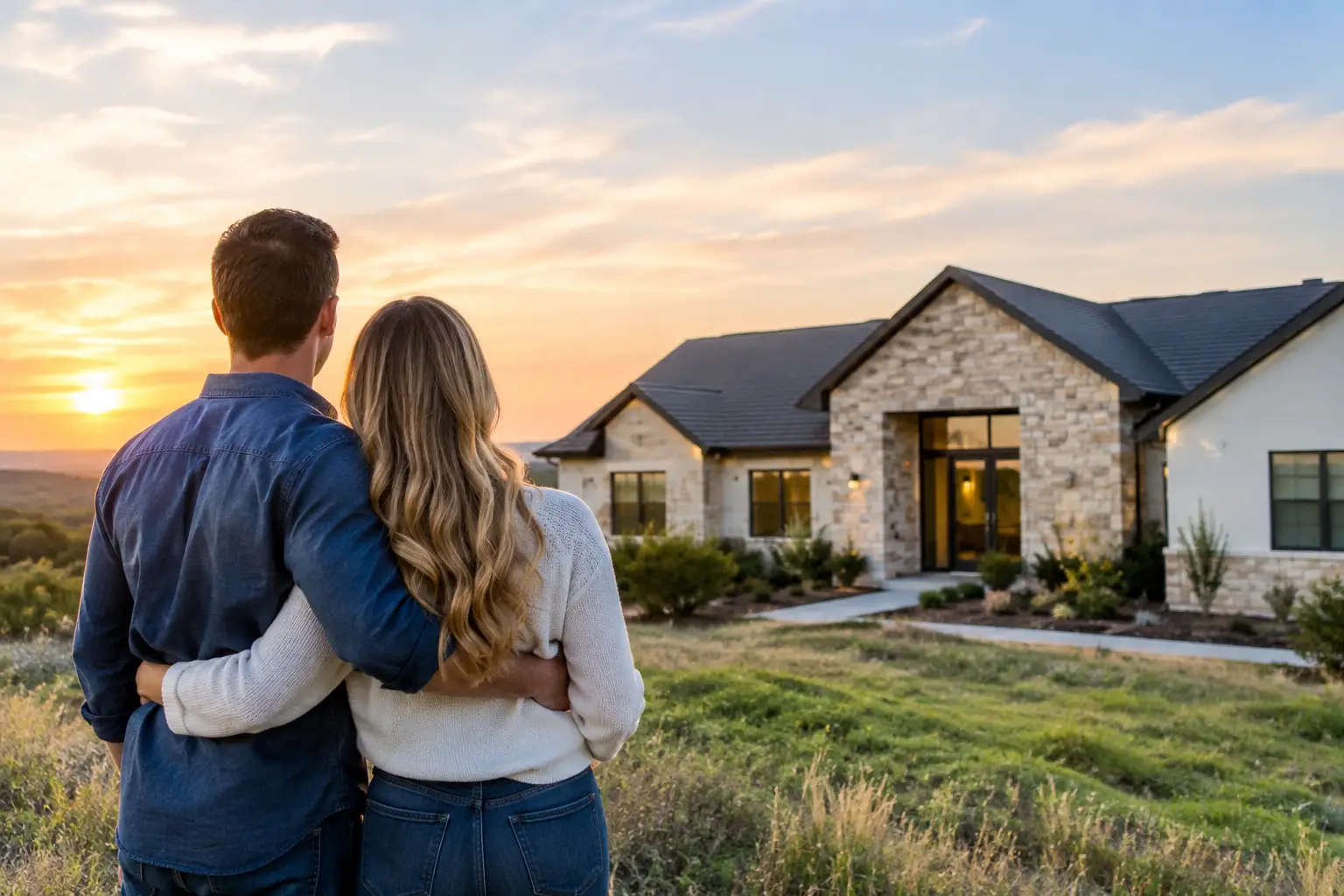
A custom home can feel like the answer to every compromise you have made while house hunting: the kitchen that actually works for your family, a pantry with room to spare, a porch that catches the Hill Country view, and no surprise project waiting behind the drywall. But building a custom home in Texas is not simply choosing finishes and waiting for move-in day. It is a series of land, lending, contract, design, and timing decisions that need to work together.
The families who have the best experience are not necessarily the ones with the biggest budget. They are the ones who make clear decisions early, leave room for the unknowns, and have people in their corner who will give them straight talk when something does not add up.
Start With the Land, Not the Floor Plan
It is tempting to fall in love with a house plan before you own a homesite. In Central Texas, that can create an expensive mismatch. A beautiful plan may require more grading than expected, exceed setback limits, fail to fit the usable building area, or become much more costly once the builder accounts for the slope of the lot.
Before committing to land, understand what you are buying beyond the view. Ask about access, easements, utilities, floodplain conditions, deed restrictions, road maintenance, and whether septic will be required. A lot outside New Braunfels, Canyon Lake, La Vernia, or the San Antonio city limits may offer more space and freedom, but it may also require a well, septic system, propane, a longer driveway, or substantial site work.
Do not rely on a seller's casual assurance that a property is "buildable." Review the restrictions, confirm utility availability with the providers, and speak with qualified professionals about septic and site feasibility. If the land is in an HOA or architectural control area, find out whether your builder and plan will be approved before you remove your contingencies.
The cheapest lot is not always the least expensive choice
A lower-priced parcel with rock, a steep grade, limited road access, or no nearby utilities can quickly cost more than a higher-priced lot that is ready for construction. This is especially true in the Hill Country, where excavation and foundation requirements can change the numbers fast.
Land due diligence is where patient planning protects the rest of the project. It is much easier to walk away from a problem lot than to solve it after closing.
Build a Budget That Includes the Whole Project
Most custom-home budgets begin with a price per square foot. That number can be useful as a starting point, but it is not a complete budget. Two homes with the same square footage can have very different costs based on rooflines, windows, foundation type, cabinets, appliances, ceiling details, site conditions, and the level of finish you expect.
Your construction contract may include the house itself, but the overall project can also involve land acquisition, survey work, engineering, permits, driveway installation, well and septic work, utility connections, landscaping, fencing, window coverings, and furniture. Some builders include more than others. The only way to compare proposals fairly is to identify exactly what is included and what is not.
Allowances deserve special attention. An allowance is a budget placeholder for an item you will select later, such as lighting, tile, plumbing fixtures, or appliances. If the allowance does not match your actual taste, you will pay the difference. There is nothing wrong with choosing the upgrade, but it should be a deliberate choice rather than a closing-week surprise.
A healthy contingency fund is also wise. The amount depends on the project, but land with major site work or a complex design deserves more breathing room than a simple home on a prepared neighborhood lot. If the budget only works when every number stays perfect, it is too tight.
Choose a Builder Based on Process, Not Just Photos
Model homes and polished social media posts can tell you something about a builder's design style. They cannot tell you how that builder handles a delayed inspection, a backordered window, a disputed change order, or a question that comes up on a Saturday afternoon.
Talk with recent clients, not only the references provided. Ask whether the builder communicated consistently, stayed organized, explained changes clearly, and addressed issues after closing. Visit completed homes if possible, and pay attention to workmanship in less glamorous places: cabinet alignment, trim details, tile transitions, exterior drainage, and paint lines.
You should also understand the difference between a fully custom builder and a production or semi-custom builder. A production builder may offer a more predictable process and pricing structure, especially in a planned community. A true custom builder can offer more flexibility, but the design and decision process may take longer and require more active involvement from you.
Neither path is automatically better. It depends on whether your priority is flexibility, speed, price certainty, location, or a particular design vision.
Read the Contract Before You Fall in Love With Selections
The construction contract matters just as much as the floor plan. It should clearly address the scope of work, specifications, allowances, payment schedule, completion expectations, warranty, change-order process, and what happens if materials or labor costs shift.
Pay close attention to the difference between a fixed-price contract and a cost-plus contract. A fixed-price agreement can offer more predictability when the scope is well defined. A cost-plus agreement may provide flexibility, but it can expose you to more price movement. There are good reasons for either structure, but you need to understand who carries the risk when costs rise or selections change.
Change orders are one of the most common places a project can drift off budget. A change may be necessary or worthwhile, but every one should be written down with its price and timeline impact before the work happens. Verbal agreements are too easy to misunderstand once several months have passed.
For a custom build, it is also smart to have appropriate legal and financial professionals review documents that affect your obligations. Good advice before signing is usually far less expensive than a disagreement during construction.
Financing Can Shape Your Choices Early
Construction financing is different from a standard mortgage. Depending on your setup, you may use a construction-to-permanent loan, a separate land loan and construction loan, or builder financing. Lenders often review the builder, plans, specifications, appraisal, and draw schedule before approving the loan.
An appraisal can be a reality check. The future value is based on comparable sales, not simply on what you spent to build. If your plan includes highly personal or unusually expensive choices for the area, the appraised value may not support the total cost. This does not mean you should never build the home you want. It means you should know the financial tradeoff before construction begins.
If you are selling a current home to fund the project, timing deserves careful planning. Building schedules can move. Weather, inspections, labor availability, utility work, and material delays all affect the finish date. A temporary housing plan may be inconvenient, but it can be less stressful than trying to force your sale and construction timeline to line up perfectly.
Stay Involved Without Managing the Jobsite
A good builder should manage the construction. Your role is to stay informed, make selections on time, document decisions, and inspect the home at key stages. Regular updates, scheduled walkthroughs, and a shared record of selections can prevent a lot of confusion.
Independent inspections can be valuable even when the builder has an excellent reputation and municipal inspections are required. City or county inspections are not the same as a buyer-focused quality review. Consider inspections at meaningful milestones, such as pre-pour foundation, framing, pre-drywall, and final completion, based on the type of project and your inspector's recommendation.
When you walk the property, bring questions and take notes. Do not assume asking about something makes you difficult. A custom home is a major investment, and respectful questions are part of responsible ownership.
Building a Custom Home in Texas Is a Team Decision
The right home starts with more than a pretty rendering. It starts with a homesite that supports the plan, a builder whose process you trust, financing that fits the project, and enough margin for real life to happen.
If you are considering a build in the San Antonio, New Braunfels, or Hill Country area, give yourself permission to slow down at the beginning. A few careful conversations before you buy land or sign a contract can protect the home, the budget, and the peace you want to feel when you finally turn the key.